Publication


La Solitude Parissienne
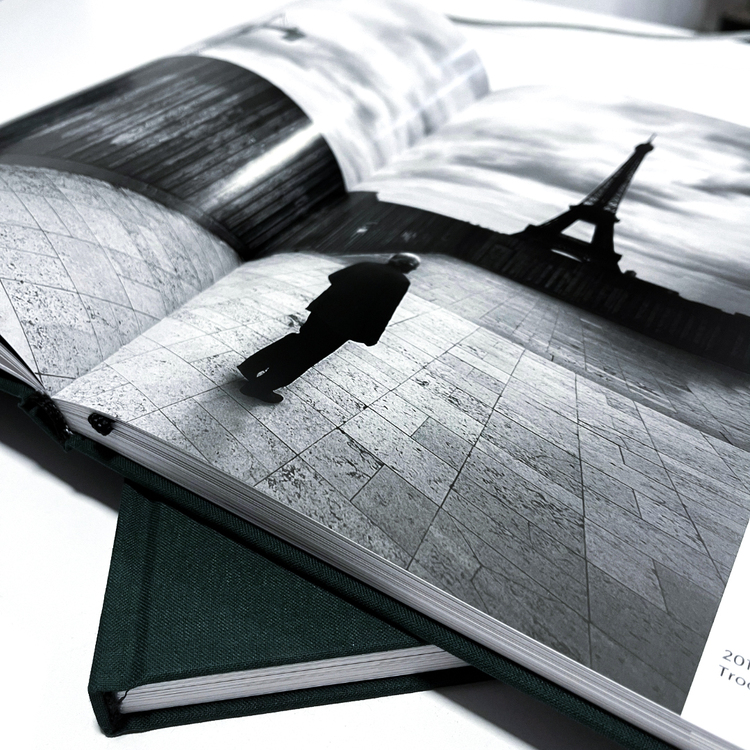
Size 23×26 cm
152 pages + cover + side paper
170 g coated stuffing
Duo Tone + semi-matte dispersion lacquer
Cover 2.5 mm Smurfit cardboard over imported dark green binding cloth
Was I following my desires, or was I here out of curiosity for Paris, or because it was the city where I could get the best answers to the questions of my self? One thing is certain: Paris is a city with a story in every corner, intertwined with history and art, calling you to new discoveries with every step you take on its streets. The first time I visited this city, which has deep traces in Turkish literature, politics and intellectuals' productions, I felt that time had stopped here. Despite the crowds filling its sidewalks, streets, cafes, squares and historical sites, Paris still gave the impression of a lonely city, alone with its historical depth.
The city has such an atmosphere that the barricades set up for the storming of the Bastille Prison have just been removed from the side streets, but the smell of gunpowder has not yet disappeared. Queen Marie Antoinette has just crossed the Alexandre III Bridge, but I can still hear the sound of her carriage driving through the cobblestone streets of the city. The guillotines installed for the execution of the Jacobins have not yet been removed in the Concorde Square, where curious crowds roam. Jean-Paul Sartre seems to have just left the Café de Flore, where he came to write because he couldn't afford to heat his house.
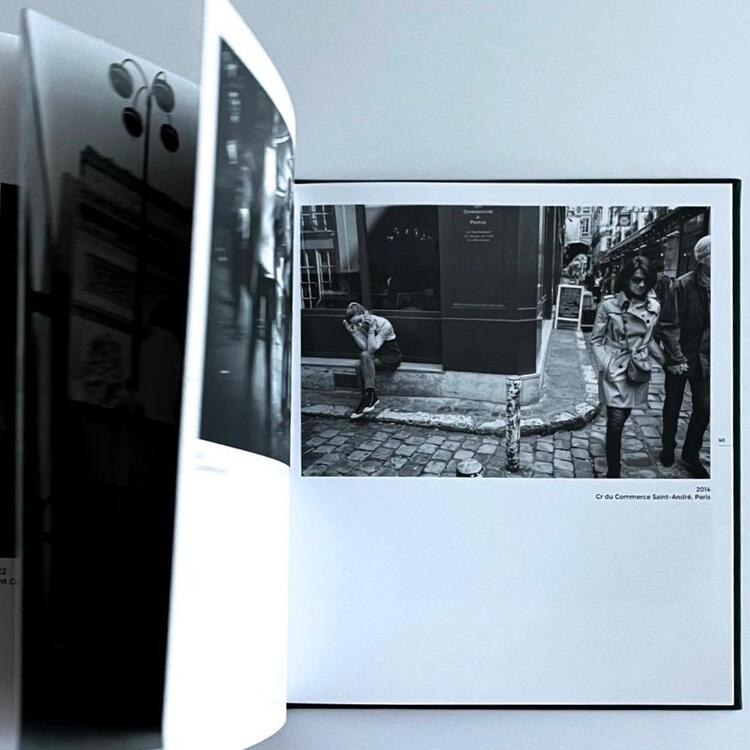
The traces of the past on every street and every stone have always pulled me in different directions. Despite all the crowds in the city, everyone is alone, like lives hanging in the void. They are together like the chance meeting of people at a soccer match, but they are alone. In Paris, loneliness is sometimes like a shadow that makes people feel the deep emptiness inside, and sometimes it is a silence lost in the crowds.
To get a deeper understanding of this feeling of loneliness, I took one of my trips alone and rediscovered the city for 10 days on a rented motorcycle. “The traveler gets to know the solitude he has by discovering the crowds he does not and will not have,” Marco Polo said. Paris was just such a place. People get lost in the crowds but at the same time discover their inner solitude. Every corner, every moment and every step in the city was a disappearance for me, but this disappearance was also a discovery. I think this was the reason why Paris called me so often; I came to this lonely city many times to get to know my own solitude.
My returns were always like those of travelers returning home at sunset, tired but lightened by their burden. Every journey, every discovery in Paris made one a little lighter, but also deeper. Again, as Marco Polo said, “As one travels, one realizes that differences disappear.” It was the same in Paris. There was a disappearance in every step, but a discovery in every disappearance. Paris was a city where I both got lost and found myself again.
Bayram Yılmaz




La Solitude Parissienne
Size 23×26 cm
152 pages + cover + side paper
170 g coated stuffing
Duo Tone + semi-matte dispersion lacquer
Cover 2.5 mm Smurfit cardboard over imported dark green binding cloth
Was I following my desires, or was I here out of curiosity for Paris, or because it was the city where I could get the best answers to the questions of my self? One thing is certain: Paris is a city with a story in every corner, intertwined with history and art, calling you to new discoveries with every step you take on its streets. The first time I visited this city, which has deep traces in Turkish literature, politics and intellectuals' productions, I felt that time had stopped here. Despite the crowds filling its sidewalks, streets, cafes, squares and historical sites, Paris still gave the impression of a lonely city, alone with its historical depth.
The city has such an atmosphere that the barricades set up for the storming of the Bastille Prison have just been removed from the side streets, but the smell of gunpowder has not yet disappeared. Queen Marie Antoinette has just crossed the Alexandre III Bridge, but I can still hear the sound of her carriage driving through the cobblestone streets of the city. The guillotines installed for the execution of the Jacobins have not yet been removed in the Concorde Square, where curious crowds roam. Jean-Paul Sartre seems to have just left the Café de Flore, where he came to write because he couldn't afford to heat his house.
The traces of the past on every street and every stone have always pulled me in different directions. Despite all the crowds in the city, everyone is alone, like lives hanging in the void. They are together like the chance meeting of people at a soccer match, but they are alone. In Paris, loneliness is sometimes like a shadow that makes people feel the deep emptiness inside, and sometimes it is a silence lost in the crowds.
To get a deeper understanding of this feeling of loneliness, I took one of my trips alone and rediscovered the city for 10 days on a rented motorcycle. “The traveler gets to know the solitude he has by discovering the crowds he does not and will not have,” Marco Polo said. Paris was just such a place. People get lost in the crowds but at the same time discover their inner solitude. Every corner, every moment and every step in the city was a disappearance for me, but this disappearance was also a discovery. I think this was the reason why Paris called me so often; I came to this lonely city many times to get to know my own solitude.
My returns were always like those of travelers returning home at sunset, tired but lightened by their burden. Every journey, every discovery in Paris made one a little lighter, but also deeper. Again, as Marco Polo said, “As one travels, one realizes that differences disappear.” It was the same in Paris. There was a disappearance in every step, but a discovery in every disappearance. Paris was a city where I both got lost and found myself again.
Bayram Yılmaz